Yet they just renamed it as amino sweet  i’m amazed that people can actually work in this industry and do this. Take home a paycheck go home with their family and sleep at night. This is so immoral and it should be illegal, but of course this is corporal capitalism America, no longer the old-fashioned capitalism where products competed now they’re shoved down our throat literally
Designed with WordPress
-
Can a robot carry and feed us to full term???
Robots carrying a full baby to term starting with lambs in 2017
Let’s look at the future science of robots/artificial wombs and how, theoretically, a robot (or robotic system) could carry a baby to full term:
⸻
- Artificial Womb Basics (Ectogenesis)
• Current research (like the biobag at the Children’s Hospital of Philadelphia, 2017) has shown it’s possible to support premature lambs in a fluid-filled bag connected to a machine that mimics a placenta.
• The goal is to replace the biological womb environment: providing oxygen, nutrients, waste removal, protection, and hormonal regulation.
⸻
- How Robots Could Be Involved
A “pregnancy robot” wouldn’t be a humanoid android with a belly—it would likely be a highly engineered biocapsule, with robotic and AI systems managing everything:
• Amniotic Environment Simulation
• A sterile, fluid-filled chamber where the fetus floats.
• Constant monitoring of temperature, pressure, oxygen levels, and amniotic fluid chemistry.
• Robots could replenish fluid, filter waste, and detect infection in real time.
• Placenta/umbilical cord substitute
• A robotic pump-and-filter system acting like a placenta: exchanging oxygen, glucose, amino acids, and hormones.
• Tiny sensors along the artificial cord could track nutrient delivery second by second.
• Hormonal and developmental cues
• Pregnancy isn’t just “feeding the baby”—the mother’s body signals the fetus when to grow lungs, when to strengthen bones, when to prepare for birth.
• A robotic system could deliver artificial hormone pulses (e.g., cortisol, estrogen, progesterone) based on fetal development milestones.
• AI Oversight
• Machine learning would be essential—constantly comparing the baby’s vital signs to massive databases of normal fetal development.
• AI could adjust oxygen flow, nutrient balance, or intervene if the fetus shows distress.⸻
- From Early to Full-Term
• First trimester is still the hardest challenge: implantation and placental development are extremely complex. Most current visions of artificial wombs start at around 20–24 weeks (age of viability).
• Mid-to-late pregnancy is more feasible: once the basic organs exist, a robotic system could sustain and grow them.
• Birth itself would be managed by draining the chamber, detaching the artificial umbilical cord, and providing immediate respiratory transition support.
⸻
- Ethical and Social Implications
• Premature infants: The first real-world use will likely be keeping micro-preemies alive.
• Infertility & surrogacy: In the future, couples might choose robotic gestation instead of a human surrogate.
• Redefinition of motherhood/parenthood: Raises huge cultural, legal, and religious questions.
⸻
- The Far Future Vision
Imagine a robotic womb nursery:
• Rows of transparent pods, each with a baby floating inside.
• Caretaker robots monitor and adjust every detail.
• Parents “visit” their child through VR/AR interfaces, talking and singing while the fetus hears their voices.
• AI helps determine the exact time for “birth,” and the baby is safely transitioned to independent breathing and feeding.⸻ Kent Norton 𝔎𝔢𝔫𝔱 𝔑𝔬𝔯𝔱𝔬𝔫 𝔨𝔫𝔦𝔤𝔥𝔱 𝔬𝔣 𝔶𝔬𝔯𝔢 Golden Eagle Consulting cooperating with 907 labs research into the future for about 20 minutes
- Artificial Womb Basics (Ectogenesis)
-
Contaminants in baby food no wonder babies have so many Learn disability and cancer. This is inexcusable.
We found that many companies, such as Gerber and Earth’s Best, offer parents easily-accessible information about toxic elements on their websites. But others, including five of the country’s top store-brand baby foods, make it hard for parents to find out this critical information.
For example, a parent can’t simply check these retailers’ corporate websites for information before heading to the store; instead shoppers have to scan QR codes in the store to get to a website, then enter product lot numbers or UPC codes (all while possibly juggling their baby in the store aisle!). This is not a realistic way to get this important information about contaminants to parents.
Tell Walmart, Kroger, Target, Aldi and Albertson’s to make it easy for parents to know what’s in their baby food products.
-
Seed oils: chiropractor, specifically, or really beating up seed oils: here’s an abstract of a very long article
Certainly, Ernest. The BBC Future article titled “Are seed oils really bad for you?” explores the health implications of seed oils, addressing prevalent myths and presenting current scientific understanding. Here’s a concise summary:
🧪 What Are Seed Oils?
Seed oils are extracted from the seeds of plants and are commonly used in cooking and processed foods. Examples include canola, corn, cottonseed, soybean, sunflower, safflower, grapeseed, and rice bran oils. These oils are rich in polyunsaturated fatty acids (PUFAs), particularly omega-6 fatty acids like linoleic acid.
🔍 Health Concerns and Scientific Findings
Omega-6 Fatty Acids and Inflammation: Some claims suggest that high intake of omega-6 fatty acids leads to chronic inflammation and associated diseases. However, human studies have not consistently supported this. In fact, higher levels of linoleic acid have been associated with a lower risk of cardiovascular events. Cancer Risk: Concerns about seed oils increasing cancer risk lack substantial evidence. Organizations like the World Cancer Research Fund and Cancer Council Australia state there’s no scientific proof linking seed oil consumption to cancer. Processing Methods: Critics point to the use of industrial solvents like hexane in oil extraction. While hexane is used, studies have found that the trace amounts remaining in oils are not harmful to human health.
🧠 Misinformation and Sociopolitical Factors
The article discusses how misinformation about seed oils has been propagated, particularly within certain political and social groups. Figures like Joe Rogan and Robert F. Kennedy Jr. have voiced opposition to seed oils, linking them to various health issues without robust scientific backing. This narrative has gained traction in some right-wing and wellness communities.
✅ Conclusion
Current scientific evidence does not support the notion that seed oils are inherently harmful. Moderate consumption, as part of a balanced diet, is considered safe. The fears surrounding seed oils often stem from misinformation rather than empirical data.
If you’re interested in more detailed information or specific aspects of the article, feel free to ask!
-
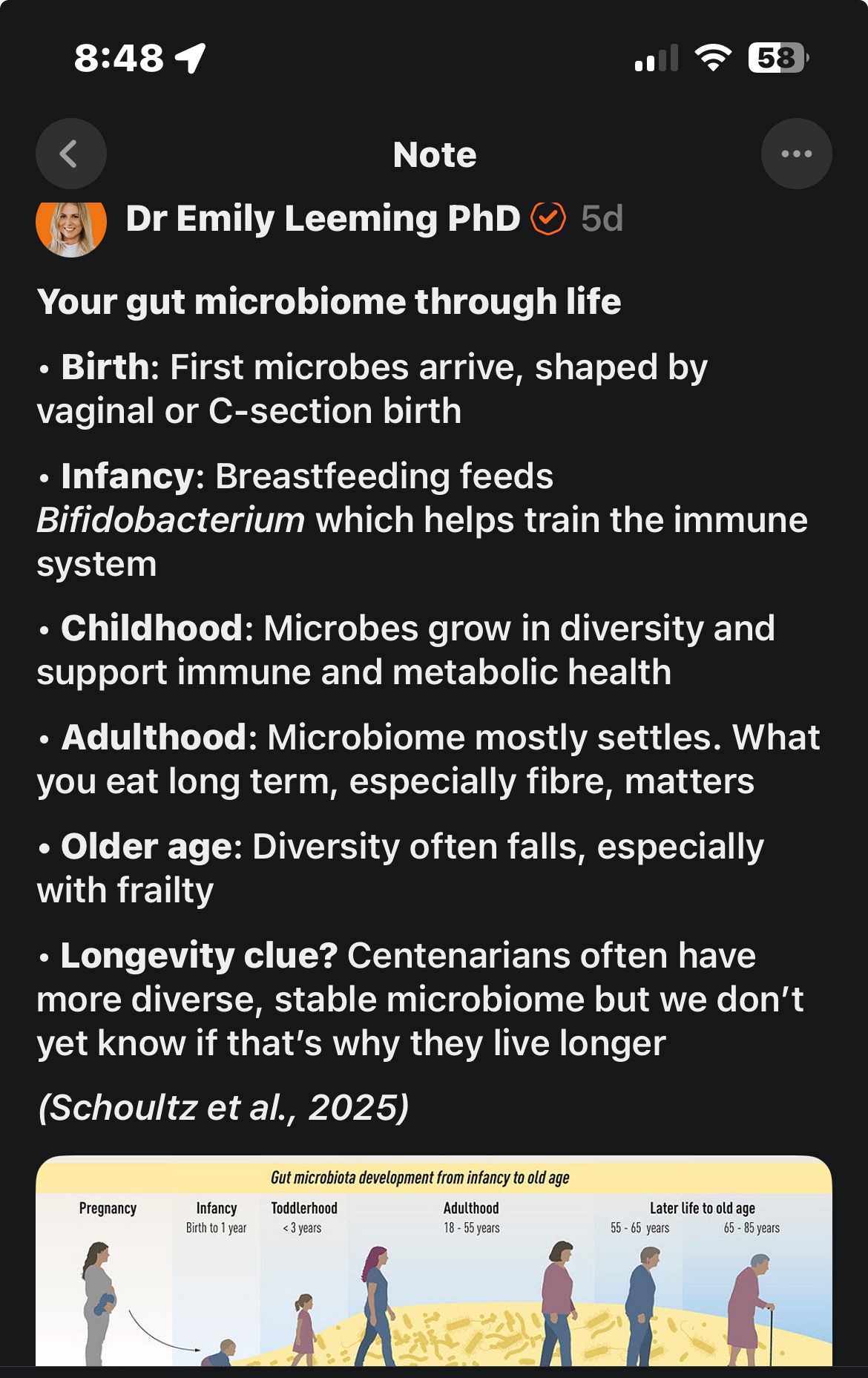
Your guts full of microbes it should be a garden not a pot of sewage get on probiotics right now
Good chemistry
The interactions between microbes and the human body often come down to specific chemicals — and the microbiome, particularly in the gut, is a massive, mysterious chemical gold mine.
-
by
-
Decoding the Chemistry of the Microbiome | Harvard Medicine Magazine
More causative clues emerged when researchers began manipulating microbiomes to change phenotypes (observable traits, such as disease symptoms). Scientists would find a mouse model of fatty liver disease, for example, and then treat the mouse with antibiotics to erase its microbiome. If erasing the microbiome changed the liver disease or cured it, that suggested the microbiome was somehow involved.
— Read on magazine.hms.harvard.edu/articles/decoding-chemistry-microbiome


 Site Title